
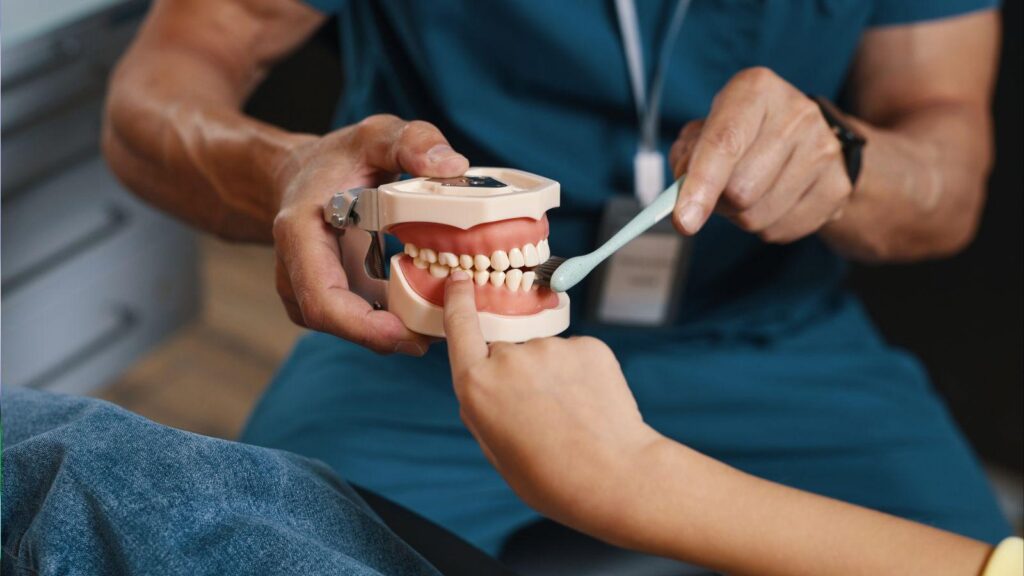
You likely meet a dental hygienist at the start of your appointment and a dentist for more complex care. Hygienists clean your teeth, check for gum disease, and teach you how to care for your mouth; dentists diagnose problems, create treatment plans, and perform surgeries or restorations when needed — all services available from a trusted cosmetic dentistry provider in Hollywood, FL.
You will learn how their training, daily tasks, and patient roles differ and why both are key to keeping your teeth and gums healthy. This article breaks down who does what, how their work overlaps, and when you should see one over the other so you can feel confident at your next dental visit.
Core Job Responsibilities
You will learn who cleans and who diagnoses, and how they plan treatment. The next parts explain the routine tasks each role performs and the specific actions you can expect during a visit.
Preventive Care Services
A dental hygienist focuses on cleaning and preventing disease. You will get scaling and polishing to remove plaque and tartar above and below the gumline. Hygienists apply fluoride, place dental sealants for children and high-risk adults, and give personalized brushing and flossing advice.
A dentist also supports prevention but does other steps. You may receive oral cancer screenings, professional fluoride treatments for severe decay risk, and counseling on diet or tobacco effects. Dentists can prescribe preventive medicines and decide if more advanced preventive care, like custom trays or periodontal therapy, is needed.
Key tasks you’ll notice at a visit:
- Hygienist: scale, polish, take routine X-rays, apply sealants/fluoride, teach home care.
- Dentist: perform oral exams, assess decay risk, prescribe medications, sign off on preventive plans.
Diagnostic Procedures
Hygienists collect data to help find problems early. You will have periodontal probing to measure gum pockets, routine bitewing X-rays taken or updated, and oral soft tissue checks. Hygienists record gum measurements, note plaque and bleeding, and report findings to the dentist.
Dentists review that information and make formal diagnoses. You will get a full-mouth exam, interpret radiographs for cavities or bone loss, and evaluate tooth structure and restorability. Dentists may order more imaging like panoramic X-rays or CBCT scans for complex cases.
Diagnostic steps you should expect:
- Hygienist: take X-rays, probe gums, chart findings.
- Dentist: read X-rays, diagnose cavities, gum disease, infections, and decide next steps.
Treatment Planning
Hygienists help create and carry out parts of the treatment plan. You will receive non-surgical periodontal care, maintenance schedules, and behavioral coaching. Hygienists document progress and recommend frequency of cleanings or referrals to a periodontist if pockets worsen.
Dentists develop the comprehensive plan you’ll follow. You will get a written or verbal plan that lists needed fillings, crowns, root canals, extractions, or gum surgery. Dentists prioritize treatments by urgency, estimate costs, and coordinate referrals to specialists like endodontists, oral surgeons, or orthodontists.
How plans move forward:
- Hygienist: implement preventive and periodontal portions, monitor outcomes.
- Dentist: set overall goals, perform or refer surgical/restorative procedures, approve timelines and budgets.
Education and Training Paths
You’ll learn the different school routes, exams, and ongoing training that separate dental hygienists from dentists. Expect shorter, focused programs and state licensing for hygienists, and longer professional degrees plus clinical residencies for dentists.
Academic Requirements
Dental hygienist programs usually take 2–3 years and lead to an associate degree; some schools offer bachelor’s degrees in dental hygiene. Course work focuses on oral anatomy, preventive care, radiography, and clinical practice hours. You’ll spend significant time in supervised clinics treating real patients.
Dentists first complete a 4-year bachelor’s degree with science prerequisites, then 4 years of dental school to earn a DDS or DMD. Dental school covers diagnosis, restorative techniques, oral surgery, and complex patient care. Many dentists also complete residencies or specialty programs that add 1–6 years for fields like orthodontics or oral surgery.
Licensing and Certification
You must pass national and state exams to practice. Hygienists take the National Board Dental Hygiene Examination plus a state or regional clinical board; some states accept a local clinical exam or a regional testing agency score.
Dentists pass the National Board Dental Examinations (Part I and II or integrated formats) and a clinical licensing exam accepted by their state. If you pursue a specialty, you need board certification from specialty boards after residency training.
Continuing Education
Both roles require continuing education (CE) to keep licenses active. Hygienists typically complete 10–30 CE hours every 1–2 years depending on state rules. CE topics often include infection control, new preventive techniques, and radiography updates.
Dentists have higher CE hour requirements in many states and may need specific courses in pain management, sedation, or advanced restorative methods. Specialists must meet additional maintenance requirements from their certifying boards. You’ll need to keep certificates and renew on schedule to avoid lapses in licensure.
Scope of Practice Comparison
You will see different tasks, limits, and legal rules for dental hygienists versus dentists. The differences affect what procedures each can perform, what medicines they can write, and how closely they must work under a dentist’s direction.
Allowed Clinical Procedures
Dental hygienists focus on preventive care. You can expect them to perform cleanings (scaling and polishing), take dental X-rays, apply topical fluoride and sealants, and provide oral hygiene instruction. In many places hygienists also place and remove temporary restorations, take impressions for study models, and perform periodontal charting and basic periodontal therapy like root planing under set protocols.
Dentists perform diagnosis and treatment of disease. They restore teeth with fillings and crowns, perform root canals, extract teeth, do complex periodontal surgery, place dental implants, and manage orthodontic and prosthetic treatment plans. Dentists make final decisions about treatment plans and handle any procedures that change tooth structure, bone, or require surgery.
Prescriptive Authority
Hygienists’ ability to prescribe varies by state or country. In many U.S. states you cannot write prescriptions for systemic medications; you may only apply or recommend topical agents like fluoride or certain medicated rinses under a dentist’s order. Some regions allow limited prescriptive authority for specific agents or collaborative practice agreements.
Dentists hold full prescriptive authority for oral healthcare. You can receive antibiotics, pain relievers, sedatives, and other systemic drugs directly from a dentist. Dentists must consider medical history, drug interactions, and dental diagnoses when prescribing. They also issue written or electronic prescriptions for medications needed before, during, or after dental procedures.
Supervision and Collaboration
Dental hygienists often work under varying levels of supervision. You may see hygienists operating under direct supervision (dentist on-site), indirect supervision (dentist available by phone), or in a few places, independent practice after meeting state requirements. Supervision rules determine which procedures hygienists can perform without prior dentist examination.
Dentists carry primary responsibility for diagnosis and comprehensive care. You will find dentists leading treatment planning, signing off on delegated procedures when required, and consulting with hygienists and specialists. Collaboration improves patient care: hygienists monitor oral hygiene and detect issues, then refer or escalate to dentists for diagnosis and advanced treatment.
Patient Interaction and Daily Work
You will interact with patients through direct care, education, and coordination with the dentist. Tasks range from cleaning and exams to discussing treatment steps and follow-up care.
Patient Communication Roles
You explain oral hygiene steps in simple terms and show proper brushing and flossing techniques. You assess a patient’s concerns, note medical history, and flag risks like gum disease or dry mouth. When you spot issues, you explain what you found, why it matters, and what the next steps are. You also answer questions about pain, sensitivity, or side effects from medications.
You talk with patients of all ages, adjusting your language for children, teens, or older adults. You document conversations in the chart so the dentist and other staff have a clear record. You may also coach patients on diet, tobacco cessation, and using fluoride or interdental tools.
Routine Appointment Tasks
You perform cleanings that include scaling to remove plaque and tartar, polishing, and applying fluoride when needed. You take and review X-rays or intraoral photos to spot cavities or bone loss before the dentist examines the patient. You record periodontal measurements and note bleeding, pocket depths, and mobility.
You prepare the operatory and sterilize instruments between patients to maintain safety. You may place temporary fillings, apply sealants, or administer local anesthetic if allowed by your state. You hand off findings to the dentist and help implement the treatment plan during restorative or surgical visits.